Short answer: Documents for divorce - a broad subject for discussion. If you have found this article you were either looking for documents that need to be filed for divorce o
Documents for divorce in Stage 1
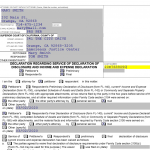 You or your attorney will file the following initial documents for divorce :
Petition, Summons, local forms ( depending on the county your/ your spouse lives), Declaration Under Uniform Child Custody Jurisdiction and Enforcement Act if there are minor kids.
documents for divorce you need to bring to your attorney in Stage 1 are prenuptial/ postnuptial agreement if you have any, retirements/pension statements, list of personal property, stocks, bonds, mutual funds documents, wills/ trusts if you have any, list of the separate property you have, deeds on the real estates.
If you are filing by yourself, be sure you know that in California, there are two grounds for uncontested divorce. These are: ‘Irreconcilable differences, which have caused the irremediable breakdown of the marriage’ or ‘Incurable insanity.
If you have an uncontested divorce, you and your spouse will also need to agree the terms of your Marital Settlement Agreement or Stipulated judgment with regards to division of property, assets, liabilities, child support, and child custody. This agreement will also disclose tax returns.
You or your attorney will file the following initial documents for divorce :
Petition, Summons, local forms ( depending on the county your/ your spouse lives), Declaration Under Uniform Child Custody Jurisdiction and Enforcement Act if there are minor kids.
documents for divorce you need to bring to your attorney in Stage 1 are prenuptial/ postnuptial agreement if you have any, retirements/pension statements, list of personal property, stocks, bonds, mutual funds documents, wills/ trusts if you have any, list of the separate property you have, deeds on the real estates.
If you are filing by yourself, be sure you know that in California, there are two grounds for uncontested divorce. These are: ‘Irreconcilable differences, which have caused the irremediable breakdown of the marriage’ or ‘Incurable insanity.
If you have an uncontested divorce, you and your spouse will also need to agree the terms of your Marital Settlement Agreement or Stipulated judgment with regards to division of property, assets, liabilities, child support, and child custody. This agreement will also disclose tax returns.
Stage 2 - Serving Your Forms
In order to serve your spouse, you will need:- An Original filed Petition for Divorce form
- A filed Summons form
documents for divorce in Stage 3 - The Disclosure Period
At this stage of the divorce proceedings, you must sign and give your spouse:- A Declaration of Disclosure form
- A Schedule of Assets and Debts
- An Income and Expense form
- A Declaration for Uncontested Divorce form
- A Judgment form
- A Notice of Entry of Judgment form
- An Appearance, Stipulation and Waivers form
- An Income Expenses form (including your last 3 pay stubs or profit loss statement attached)
- The Schedule of Assets and Debts form
- Your Marital Settlement Agreement/ Stipulated judgment
Additional Considerations for Divorce in California
When preparing for a divorce in California, understanding the full spectrum of documents and legal requirements is crucial for a smooth and efficient process. Beyond the basic stages, additional considerations and steps may be needed based on your specific situation.Legal Separation vs. Divorce
Consider whether legal separation might be a better option for your circumstances before filing for divorce. Legal separation allows couples to live apart and make separate decisions regarding finances, property, and custody without dissolving the marriage. This can be suitable for those with religious or personal reasons for not seeking a divorce.Mediation and Collaborative Divorce
For couples seeking a less adversarial process, mediation or collaborative divorce may be viable alternatives. Mediation involves a neutral third-party mediator helping both spouses reach agreements on various issues. Collaborative divorce involves both spouses and their attorneys working together to negotiate and settle disputes without going to court.Temporary Orders
During the divorce process, you may need temporary orders to address immediate concerns such as child custody, support, and use of the family home. These orders provide stability and clarity while the divorce is pending. To obtain temporary orders, file a Request for Order form and attend a court hearing.Spousal Support (Alimony)
In addition to child support, spousal support (or alimony) may be awarded to the lower-earning spouse to maintain a similar post-divorce standard of living. Factors influencing spousal support include the marriage length, each spouse’s earning capacity, and contributions to the marriage. Temporary spousal support can be requested early, while permanent spousal support is determined in the final judgment.Property Valuation and Division
Accurate valuation of marital property is essential for equitable division. This may require appraisals of real estate, businesses, and personal property. If the marital home is involved, you must decide whether to sell the property and divide the proceeds or have one spouse buy out the other's interest.Retirement Accounts and Pensions
Dividing retirement accounts and pensions can be complex and often requires a Qualified Domestic Relations Order (QDRO). A QDRO is a legal order dividing retirement plan benefits, approved by the court and the retirement plan administrator. Understanding the tax implications and long-term financial impact of dividing these assets is crucial.Tax Considerations
Divorce has significant tax implications. Filing status, dependency exemptions, and the division of tax liabilities and refunds are all factors to consider. Consulting with a tax professional can help you understand the potential impact on your tax situation and plan accordingly.Domestic Violence
If domestic violence is a factor in your divorce, take steps to ensure your safety and your children's safety. California law provides for restraining orders that can protect you from an abusive spouse. These orders can include provisions for temporary custody and support, as well as exclusion from the family home.Post-Divorce Modifications
Life circumstances can change significantly after a divorce, necessitating modifications to child support, spousal support, or custody arrangements. To modify a court order, you must demonstrate a substantial change in circumstances by filing a Request for Order form and attending a court hearing. Call TODAY for free case evaluation 714-390-3766This article provides general legal information only. It is not legal advice and does not create an attorney-client relationship. For advice about your specific situation, contact a qualified attorney.